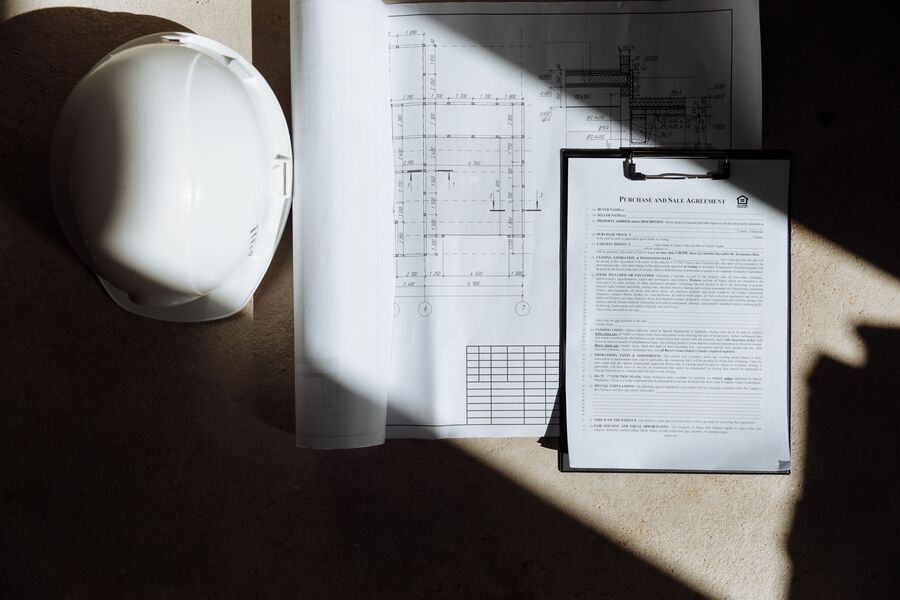
A roofing contractor who quotes a job on a napkin loses money the same way every time: the client remembers a number that never included permits, dump fees, or a rain delay. A written estimate fixes that before the first nail goes in, and it becomes the paper trail that turns into a clean, defensible invoice once the work is done.
What Belongs In A Solid Construction Estimate
A construction estimate is not a quick guess written on the back of a business card. It needs a project description, a materials list with unit costs, labor hours priced at your real rate, permit and disposal fees, and a clear validity window (most contractors use 30 days, since material prices move fast). Leave any of those out and you either eat the difference or start an argument with a client who thought the number was final.
This is also a recordkeeping issue, not just a courtesy. The IRS expects self-employed contractors and small business owners to keep supporting documents, including the estimates, invoices, and receipts that back up income and expenses reported on a tax return. IRS Publication 583 lays out what counts as an adequate business record, and a dated, itemized estimate that matches the final invoice is exactly the kind of paper trail that holds up if a return ever gets questioned. Contractors who build estimates from a consistent template, rather than a different scrap of paper for every job, end up with records that are actually usable at tax time.
A construction estimate template solves this by locking in the same fields every time: client info, job address, scope of work, line-item pricing, tax, and signature lines for both parties. Whether you are pricing a kitchen remodel, a roof replacement, or a plumbing repair, the structure barely changes, only the line items do. That is why a general contractor estimate template and a roofing estimate template or plumbing estimate template usually share the same skeleton, just with different trade-specific categories swapped in.
Building In A Realistic Contingency
The number one reason estimates turn into disputes is that contractors price the job they can see and skip the one they can't. Hidden water damage behind a wall, a permit office that takes three extra weeks, a supplier price hike between the estimate and the start date: none of that is unusual, and all of it is why professional estimators build a contingency line into every estimate rather than treating it as an afterthought.
A cost contingency is a reserved percentage of the total estimate, typically 5 to 15 percent depending on the project's complexity and how much of the site conditions are already known, set aside specifically to absorb these unknowns without forcing a renegotiation mid-project. It is a standard part of professional cost estimating practice, not padding. Leaving it off a template is one of the most common reasons a landscaping estimate template or an electrical estimate template ends up 20 percent under the real cost by the time the job wraps.
Put the contingency on its own labeled line, not buried inside the labor rate. Clients respond better to "10% contingency for unforeseen site conditions" than to a labor number that looks inflated for no stated reason. A template with a dedicated contingency field also makes it easy to have the honest conversation up front: if the wall comes down and there's rot behind it, the client already agreed to the possibility in writing.
From Estimate To Invoice Without Starting Over
Most contractors still build estimates the way they did ten years ago: a spreadsheet or a printed pad, then a second document created from scratch once the job is approved. That gap is where errors creep in, a line item gets dropped, a quantity gets mistyped, and the invoice no longer matches what the client actually agreed to.
Software adoption in this space has been accelerating for exactly that reason. Reviews of the current construction estimating tools point to features like templated line items, tax auto-calculation, and one-click conversion from estimate to invoice as the features contractors now expect by default, not as extras. Forbes Advisor's review of construction estimating software highlights this shift toward tools that keep the estimate and the final billing document connected, rather than treating them as two unrelated files.
You do not need a subscription or a login to get the same benefit. A free construction estimate template, filled in once with your line items and contingency built in, can be duplicated and turned directly into an invoice the moment a client signs off, keeping the numbers identical from the first quote to the final bill. The same applies whether you are working from a general contractor estimate template, a hvac estimate template, or a tree removal estimate template. The category changes, but the discipline of matching your estimate to your invoice line for line does not.
If you already have a signed estimate sitting in a spreadsheet or a PDF, the fastest way to close the loop is to pull those same line items straight into a free invoice generator and send a matching bill without retyping a single figure. It keeps your paperwork consistent, keeps your numbers defensible if the IRS ever asks, and it takes less time than writing a new invoice from scratch for every job.